
Hypothesis for Market Government
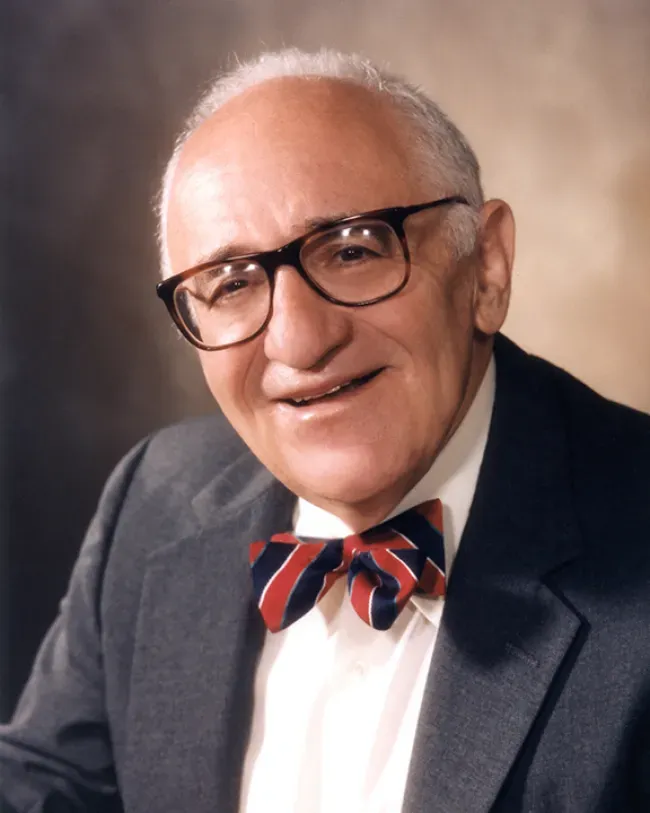
Market governance introduction with focus on Murray Rothbard, Power and Market.

Market systems replacing Earth governments will lead to increased wealth for all classes in all jurisdictions.
This is quite a bold statement, if you are thinking the only way to build a perfect planet is through forced collection of money and central banking.
There has never been an example of a 100% market based jurisdiction on Earth. Historians like to point out that some close examples did take place, such as in:
1. Medieval Iceland (c. 930–1262)
2. The Republic of Cospaia (1440–1826)
3. Early Hong Kong (Mid-20th Century)
However, these are ancient examples, and not perfected.
Lots of thought has been developed regarding 100% market governance by the Austrian School of Economics. The leading Austrian institution is the Mises Institute (mises.org). Led by Lew Rockwell, a close friend of Murray Rothbard and Ludwig von Mises, the leading architects of market system philosophy and economics.
So since this is largely a theoretical and has never been tried in our history of government on Earth, why not? Let's look at some examples of individuals who developed market based money.
When someone wants to start a market system in United States of America with sound monetary systems they are shut down with force. For example, Bernard von NotHaus tried minting his own currency based on silver coins in Evansville, Indiana. He was raided by the FBI: "In 2007, about a dozen federal government agents seized nearly two tons of coins that featured the image of Ron Paul, a libertarian Texas congressman." The FBI is the enforcement for the United States Department of Justice.
Current governments are resistant to market systems and when one arises, they shut them down with force. Nonsensical.
Those thugs in the Department of Justice with lobbying from IRS and Federal Reserve did this to early and modern day bitcoiners as well, such as the Samourai Wallet developers, "Samourai Wallet was a prominent privacy-focused, non-custodial Bitcoin wallet, designed to anonymize transactions through mixing tools like Whirlpool and Ricochet. Released in 2015, it was taken down in April 2024 following U.S. Department of Justice (DOJ) charges against its founders for money laundering and operating an unlicensed money transmitting business. [1, 2, 3]"
So clearly, someone is scared of market systems or they would not be in jail. NotHaus and the Samourai developers harmed no one, yet were dealt with extreme force and made examples of, scaring all market systems away from formation.
Now that you have context of why market systems for governance and money do not exist yet on Earth, lets present the market principles applied to government functions, such as Courts, Money, Defense, and Commuter Rail.
Market Courts:
1. The Evidence Bounty (Technical Discovery)
In a traditional court, lawyers argue for years. In this Market Court, the judge (who is essentially a highly-paid legal engineer) utilizes a pre-vetted panel of private forensic firms.
The Incentive: The forensic firms are paid based on the accuracy and replicability of their data. If their data is found to be fraudulent or sloppy, they lose their certification within the Government Company’s ecosystem.
The Result: Within days, a chemical "fingerprint" confirms the mist came from Aero-Fab.
2. The Ethical Law Ruling (Physical Invasion)
The Market Court operates on the principle that any physical invasion of property is a trespass. There is no "acceptable limit" of pollution allowed by a permit.
The Verdict: The court finds Aero-Fab guilty of a physical trespass.
The Restitution: Instead of a fine paid to the government, Aero-Fab is ordered to pay Bio-Grow for the full market value of the ruined crops, plus the cost of the forensic audit.
Market Money:
Imagine a citizen, User A, who holds a balance in a currency issued by Bank X. Bank X decides to increase the supply of its currency by 20% to fund its own investments, effectively lowering the purchasing power of every existing unit held by User A.
In a fiat system, this is "monetary policy." In a Market Court system, this is scrutinized as fraud or breach of contract.
Fiat money is inherently unstable because it allows the issuer to "edit" the wealth of the population without their consent.
Market Defense:
| Feature | State Defense (Monopoly) | Market Defense (Ethical Law) |
| Funding | Compulsory Taxation (Invasion). | Voluntary Fees (Service Contract). |
| Accountability | Sovereign Immunity. | Full Tort Liability. |
| Incentive | Political compliance and budget growth. | Efficiency, safety, and reputation. |
| Conflict Resolution | Escalation (War is "free" for leaders). | Arbitration (War is a business loss). |
Market Commuter Rail:
Using Chicago RTA/NITA as a case study:
| Feature | NITA / RTA (Current Bureaucracy) | For-Profit Market Rail |
| Driver | Political Mandate / Utility | Consumer Demand / Profit |
| Funding | Coercive Taxes (Sales/Gas) | Voluntary Fares / Investment |
| Feedback Loop | Public Outcry / Lobbying | Profit and Loss (The "Poll") |
| Tech Level | Historical Stasis (1990s) | Cutting-Edge (To beat the car) |
Murray Rothbard
In Power and Market, Murray Rothbard extends the analysis of his earlier work, Man, Economy, and State, to argue that all services typically associated with the state—including law and courts—can be provided more efficiently and ethically by the free market.
Murray Rothbard is a great modern scholar astute in market governance. I encourage you to check out Power and Market, and other scholarly works on Mises.org.
Wealth increases for all classes because a market system treats every individual as a Sovereign Consumer rather than a Subject. In a world without coercive borders and state monopolies:
- Innovation is never stifled by regulation.
- Capital is never consumed by war or bureaucracy.
- Prices reflect reality, not political favors.
The result is a global "Technological Leap" where the standard of living for the poorest in a market-governed world would likely exceed the standard of living of today’s wealthiest elites. Wealth, in this lens, is simply the absence of state-imposed friction.
Have a great day.
John