
Transparent concrete
Transparent concrete is also known as translucent concrete or light-transmitting concrete (LiTraCon) and is a special type of concrete that is prepared using the combination of optical fiber and fine aggregate that allows light to transmit from one side of a block to the other.


Concrete is the most widely used building material in the construction sector. Modern infrastructure is mostly made with concrete. Concrete is the mixture of cement, sand, stone chips/brick chips, admixture, water, or reagents. Concrete provides safety for a structure. The type of concrete that is generally used is a solid material that is opaque, not transparent. The term "transparent" means it can be visible from one part to another part.
Imagine your building is made with transparent concrete or the surrounding wall is prepared with transparent concrete. What will be in your mind? You may feel a privacy issue. Isn't it? You may be thinking it can compromise your privacy and anyone can see what you are doing in your room. Actually, it doesn't happen. Transparent concrete does not work like glass. So, nothing is visible from one part to another part in the transparent concrete; that means you can see nothing from one part to another part.
So, the main question is "What is transparent concrete?" How does it work and prepare? I am going to clear all of your doubts and questions regarding this innovative concrete.
Transparent concrete is also known as translucent concrete or light-transmitting concrete (LiTraCon) and is a special type of concrete that is prepared using the combination of optical fiber and fine aggregate that allows light to transmit from one side of a block to the other. Due to the small size of fiber used, it works as a small piece of aggregate. They have the light-transmitting property due to the presence of glass/optical fibers and uniform distribution of optical fibers throughout their body. Transparent concrete reduces the use of artificial lighting and provides an aesthetic appearance to a building.
History of Transparent Concrete:
The transparent concrete was first developed in 2001 by Hungarian architect Aron Losonczi. He named this concrete "LiTraCon" due to its light-transmitting property. He successfully produced it in 2003 but patented it with the LiTraCon name under his company, LiTraCon Bt, in 2004. After its introduction, transparent concrete has attracted global attention in the fields of architecture and civil engineering due to its unique ability to transmit light while maintaining overall structural performance. Yet, different researchers are trying to improve the mechanical and durability properties of the concrete. Transparent concrete has been successfully used in some buildings across the world, including in the USA, Japan, Germany, the UAE, China, etc.
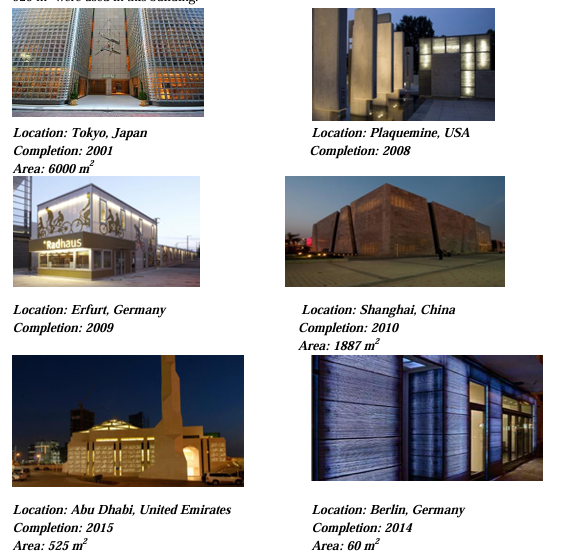
Materials required to prepare transparent concrete:
To produce transparent concrete, fiber optics and fine aggregate are mixed together. Fiber optics are used in place of coarse aggregate (stone chips). The size of these fibers is very thin, or hairline, which has the glass property.
Water: Normally fresh water is used to manufacture the transparent concrete.
Cement: Cement is the main binding material for the concrete production. Ordinary portland cement is typically used for the transparent concrete.
Sand: Fine-grained particles of sand are suitable for the transparent concrete.
Aggregate: The aggregate size must be smaller than 10 mm. The main reason for the small coarse aggregate size is to make it easy to place optical fibers in a straight line in concrete.
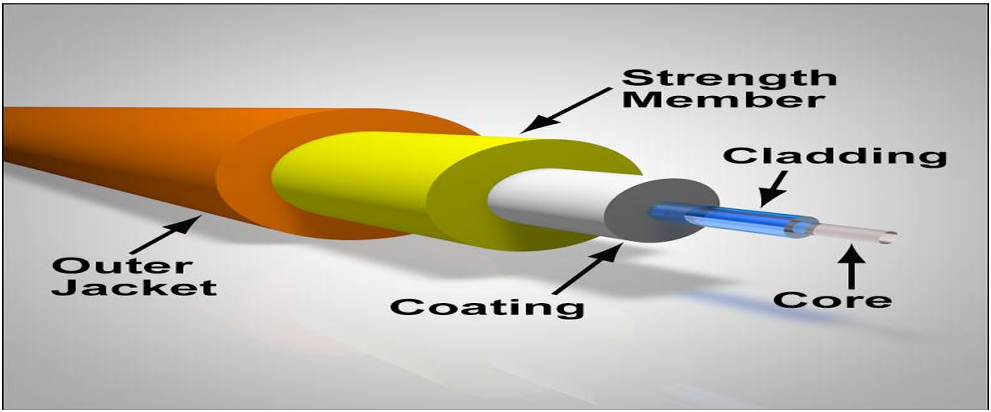
Optical Fibers: They are the main component of transparent concrete. The thickness of the fibers is slightly higher than human hairs that are made of silica or plastic. Normally fibers of size 2 μm to 2 mm are used for making transparent concrete. There are three types of optical fibers that are typically used, such as multimode graded-index fiber, multimode step-index fiber, and single-mode step-index fiber.
How transparent concrete made?
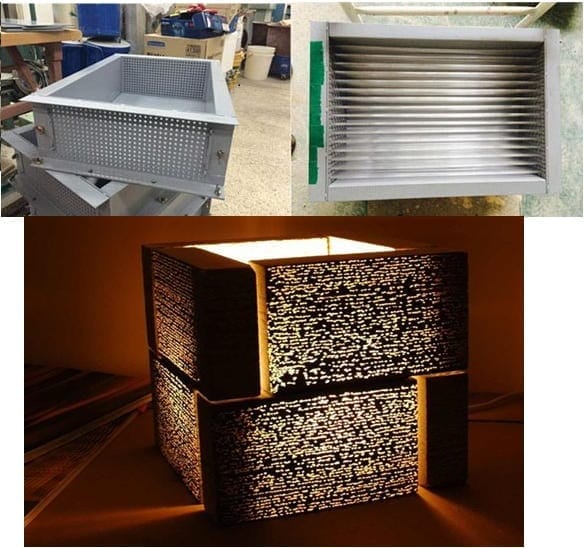
The production of transparent concrete is similar to normal concrete. The process begins with the preparation of a special mold where layers of fine concrete (cement, sand, water, and small-size aggregate) are poured. The optical fibers are arranged in a parallel manner between these layers so that they extend from one surface of the concrete to the other. If one end of the fibers is blocked or covered by fine aggregate, it will be unable to transmit light from one side to another side of the concrete. So, fibers should be carefully placed inside the mold and concrete mixtures. Thousands of fibers are placed in a straight-line arrangement and should cover most of the concrete surface area. Light-transmitting concrete is produced by adding 4% to 5% optical fibers (by volume) into the concrete mixture.
Working Principle of Transparent Concrete
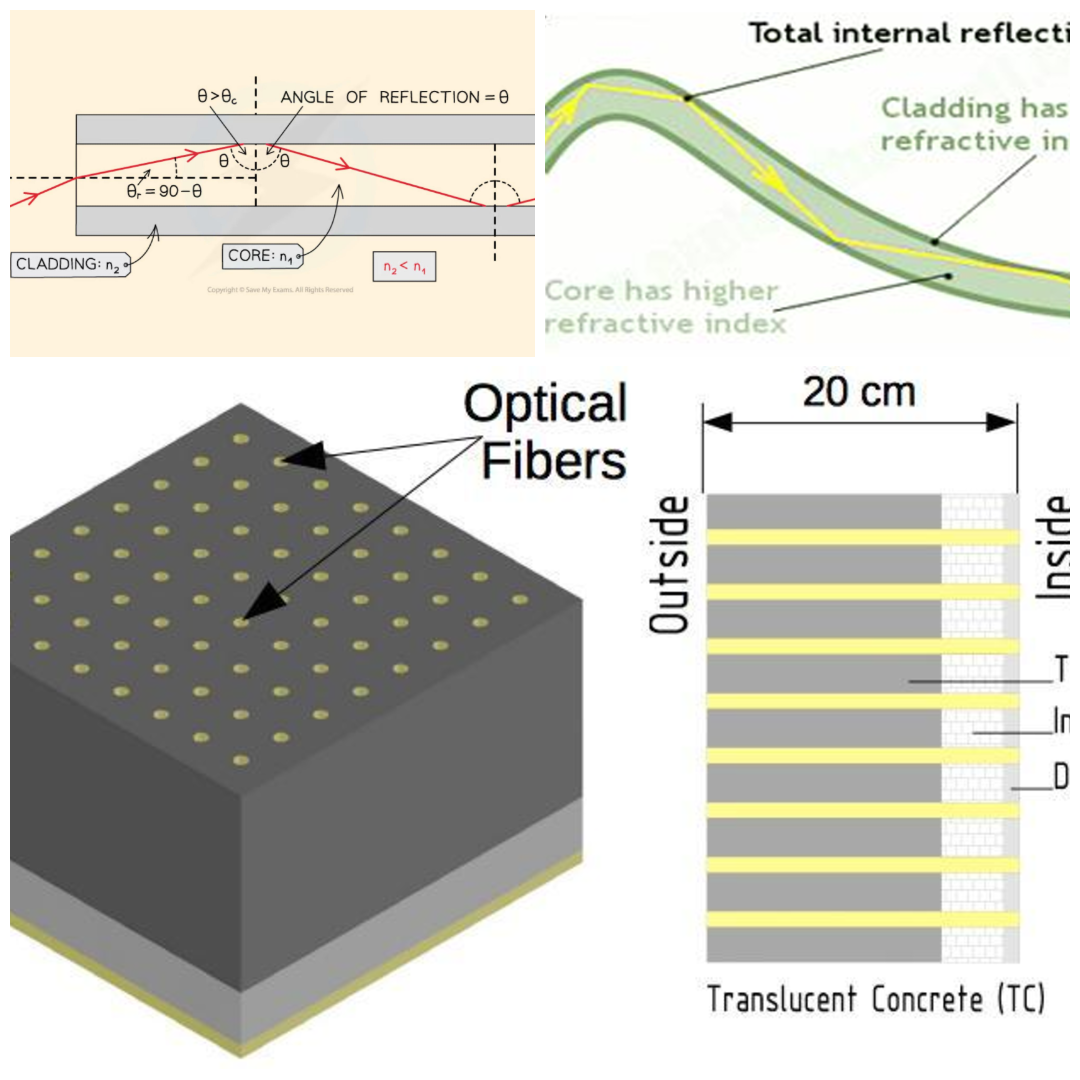
Transparent concrete works on the principle of light transmission through optical fibers, mainly due to internal reflection. As thousands of parallel and straight optical fibers are placed inside the concrete, they are extended from one side to another side of the concrete. When light falls on one side of the concrete, it enters these fibers and travels through them with very little loss. The angle at the incident point is greater than the critical point; that means the light is completely reflected back into the fiber instead of passing out. Although the concrete matrix blocks direct light, the fibers act as continuous light channels that make the material transparent.
Applications of Transparent Concrete
- Interior wall cladding, dividing walls, and facades based on thin panels.
- Transparent concrete can be used for floors, pavement, and load-bearing walls.
- Acts as partitions in low-light areas
- Used in decorative and creative purposes.
- Light hanging from the ceiling.
- Used in sidewalks to glow at night.
- Increase the visibility at the dark subway stations.
- It can be used as an important green building component.
-Ariful Islam, Bangladesh
Author, Utopia Educators
References:
1. Yadav, A., Shekhar, S., Anand, A., Badal, A., & Zaman, B. (2018). An investigating study on a new innovative material: transparent concrete. International Journal of Engineering Research and Advanced Development, 4(1), 64-72.
2. Transparent Concrete: Modern Aesthetic Future for your Home! (link)
3. Transparent Concrete (link)
4. Transparent concrete [Link]
5. Transparent Concrete—A Great Source of Light & Heat. [Link]
6. Translucent Concrete: An Emerging Material [Link]
7. TRANSPARENT CONCRETE AS A GREEN MATERIAL FOR BUILDING [Link]
8. Transparent Concrete: A Review [Gomasa Ramesh]