
Geopolymer Concrete: An Overview
Ariful Islam exploring his speciality of geopolymers, just the beginning for this alternative to OPC and other high emission concretes.

The world construction industry is associated with cement as it is the widely used binding material in the construction process. The production of cement will likely increased by 50% by 2050 as a result of urbanization. It is estimated that an increase in global cement production from 4.3 billion metric tons in 2015 to 6.1 billion metric tons in 2050. This rate is even higher in developing counties such as China with a production of about half of the global cement in 2019. The cement production requires huge amounts of energy, natural resources and higher temperature that directly contribute to the global carbon dioxide emission. On average, every ton of Portland clinker generates ~0.87 tons of CO2 [1]. The cement industry is responsible for 5-8% of total global CO2 emission. Therefore, researchers are trying to develop alternative cement free binding materials instead of Ordinary Portland Cement (OPC) due to high carbon footprint associated with OPC.
Geopolymers, also named “alkali-activated binders”, have been introduced as a promising alternative to OPC with less environmental impact. Geopolymers provides an eco-friendly construction materials and incombustible (fire-resistant) inorganic polymers. They are produced by mixing aluminosilicate sources materials such as fly ash (FA), volcanic ashes (VA) and metakaolin (MK) with alkali activators such as sodium hydroxide and sodium silicate etc. After mixing, the alkali activator dissolves the aluminosilicate precursors, and aluminate and silicate monomers are released. These monomers later undergo polycondensation reaction. As a result, the binding gels are produced with potentially low CO2 footprint, high early strength, and high thermal resistance.
Benefit of Geopolymer over OPC:
Geopolymers require lower energy for production and is responsible for significantly less CO₂ emission as compared to OPC.
The carbon footprints of FA-based AAMs are approximately 9 times less than that of OPC.
The production of FA-based geopolymer concrete leads to at least 80% lower CO₂ emissions and about 60% less embodied energy than the making of ordinary Portland cement (OPC).
The use of industrial waste materials as precursors improves sustainability.
Geopolymers reduce environmental impact and support a greener future.
Geopolymers provide high early strength, durability, and low shrinkage compared to OPC.
Demerits of Geopolymer over OPC:
Geopolymer shows high brittleness, poor toughness, and poor crack resistance.
Many geopolymer mixtures require elevated temperature curing to achieve optimal strength, which may not always be practical for field applications.
The cost of alkaline activators can be relatively high, which may increase the initial cost of geopolymer concrete compared to OPC.
The alkaline activators used in geopolymer production (such as sodium hydroxide and sodium silicate) are highly corrosive and require careful handling and safety precautions.
History of Geopolymers: The term "geopolymer" was initially introduced by Davidovits, and he developed and patented binders produced by the alkali activation of metakaolin in 1978, but the development of alkali-activated binders began in the 1940s. Purdon demonstrated that blast furnace slag could be activated with an alkaline solution to prepare the binding materials. Davidovits also patented a one-part geopolymer composed of an aluminosilicate oxide with aluminum. Duxson and Provis summarized approaches for one-part geopolymers.
Source Materials Used
Geopolymer concrete is produced using aluminosilicate-rich source materials that react with alkaline activators to form a strong binding matrix.
- Fly ash is a byproduct from coal-fired power plants.
- Ground granulated blast furnace slag is produced during iron manufacturing.
- Metakaolin is produced by heating kaolin clay.
- Rice husk ash is an agricultural by-product.
- Palm Oil Fuel Ash (POFA)
- Volcanic Ash (VA)
- Red Mud (RM)
Activator used: The most common alkaline activator used in geopolymerisation is a combination of sodium hydroxide (NaOH) or potassium hydroxide (KOH) with Na2SiO3 or K2SiO3. Others activator used for the preparation of one part geopolymer concrete are Na2SiO3-5H2O, Na2SiO3-anhydrous, Ca(OH)2, Na2SO4, NaOH, Na2CO3 etc.
Practical Example of geopolymer concrete:
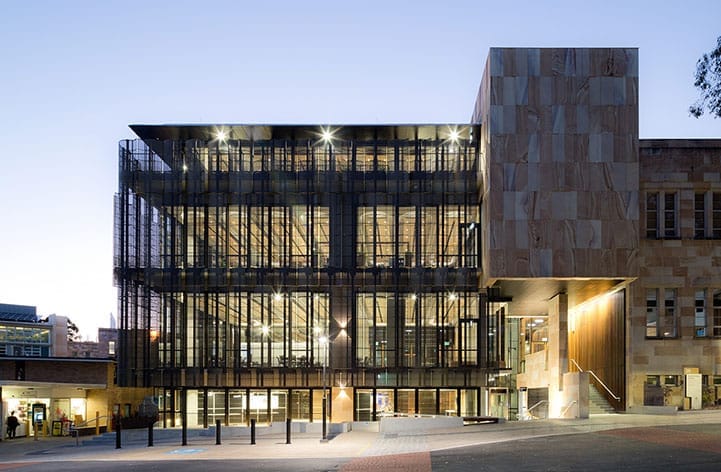
- Global Change Institute at the University of Queensland in Brisbane entirely made with geopolymer concrete in 2013 (Australia).
- West Wellcamp Airport in Brisbane in 2014 (Australia)
- A pedestrian bridge in Skolkovo and the foundations of Gazprom Neft storage facility were built entirely from geopolymer concrete (Russia).
- 1st geopolymer 3D printed house in 2018, in Siberia
- Earth Friendly Concrete (EFC) tunnel system.
- EFC twin batch plant.
Check out this follow-up by Ariful:
 Ariful Islam
References:
- DEVELOPMENT AND MIX OPTIMIZATION OF ONE PART ALKALI ACTIVATED BINDER AS A SUSTAINABLE CONSTRUCTION MATERIALS.
- In situ synchrotron powder diffraction study of LC3 cement activation at very early ages by CSH nucleation seeding.
- Ranjbar, N., & Zhang, M. (2020). Fiber-reinforced geopolymer composites: A review. Cement and Concrete Composites, 107, 103498.
- Wang, T., Fan, X., Gao, C., Qu, C., Liu, J., & Yu, G. (2023). The influence of fiber on the mechanical properties of geopolymer concrete: A review. Polymers, 15(4), 827.
- Ralli, Z. G., & Pantazopoulou, S. J. (2021). State of the art on geopolymer concrete. International Journal of Structural Integrity, 12(4), 511-533.
- Glasby, T., Day, J., Genrich, R., & Kemp, M. (2015, May). Commercial scale geopolymer concrete construction. In The saudi international building and constructions technology conference (pp. 1-11).