
Durability Properties of Geopolymer Concrete
Geopolymer concrete offers superior durability properties compared to conventional concrete.

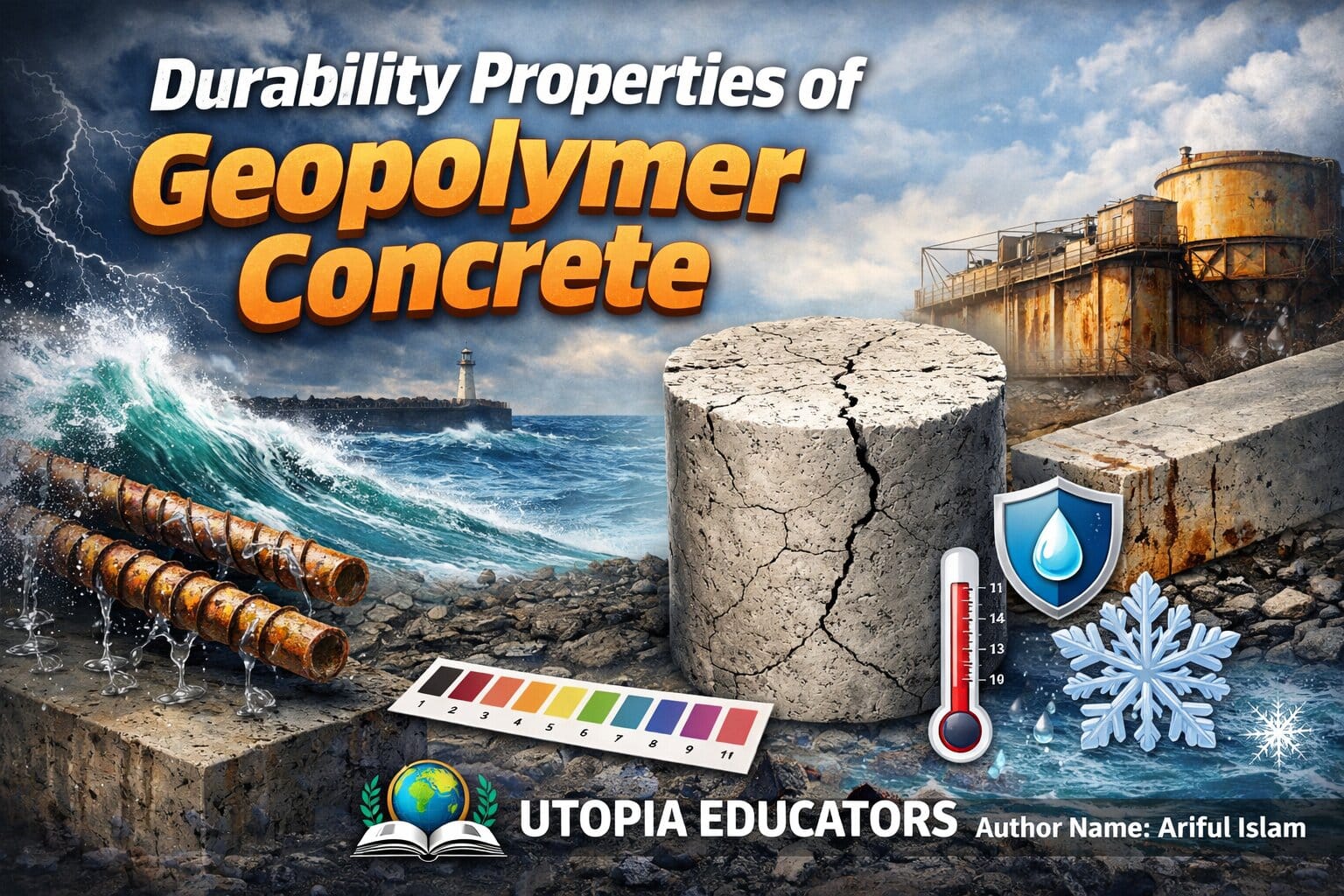
Durability is an important parameter for the concrete structures. As per the ACI committee, concrete durability is defined as the ability of concrete to withstand chemical attacks, abrasion, weathering effects, and some other weakening processes. There are several ways to determine the durability properties of geopolymer concrete. In today's article, I will briefly discuss the durability properties of geopolymer concrete.
 Ariful Islam
RCPT: Rapid chloride ion permeability test (RCPT) is used to assess the chloride resistance of concrete in severe exposure conditions. The liquid acting as an electrolyte in the RCPT test that flows through the pore spaces of concrete is used to measure the rate of electrical current. The sample with higher porosity (amount of pore spaces in the concrete) increases the current flow, while the lower porosity in the sample reduces the ion flow.
The lower chloride ion penetrability of geopolymer concrete indicates a lower corrosion potential; that means geopolymer concrete is more durable, safer, and has a longer service life. According to recent research, geopolymer concrete has a lower chloride ion penetrability value compared to conventional cement concrete. A study found that the OPC-based concrete had the highest corrosion rate compared to the metakaolin-based geopolymer concrete; that means geopolymer concrete is more durable in terms of corrosion resistance. GPC is less permeable compared to OPC concrete to chloride ion penetration. However, several factors, such as raw materials, activator content, molar ratio, mixture properties, etc., influence the chloride ion penetrability.
 Ariful Islam
Acid Resistance of GPC: Geopolymer concrete shows superior durability properties when immersed in an acidic environment compared to conventional concrete. The OPC concrete deteriorated when exposed to acid due to dissolution of its cementation particles and calcium leaching. Studies have shown that GPC maintains its mechanical properties (compressive strength, split tensile, and flexural strength) under prolonged exposure to acidic environments like sulfuric, hydrochloric, and nitric acids.
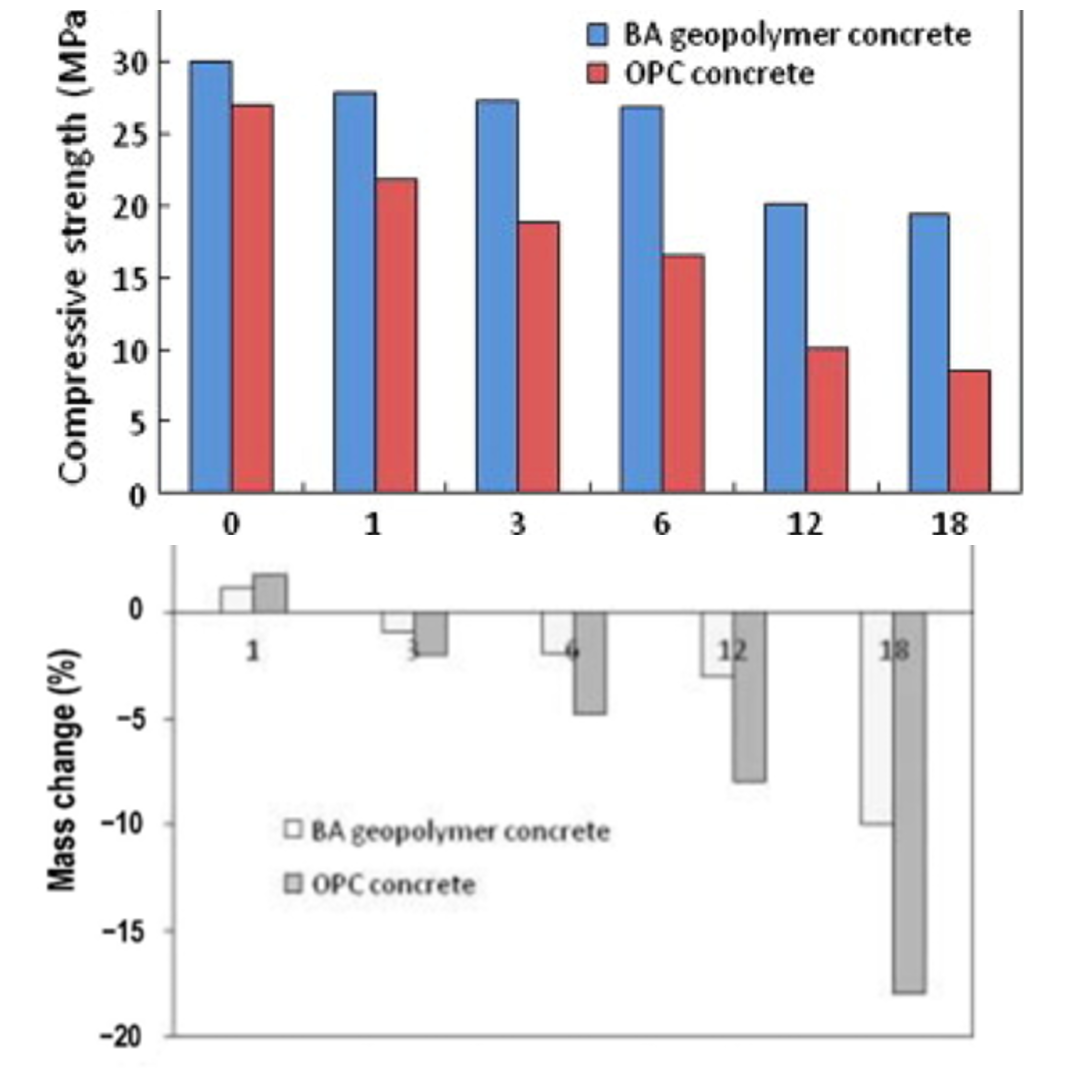
From the previous literature, geopolymer concrete is capable of 70-80% less acidic degradation compared to OPC. The fly ash-based geopolymer paste shows better resistance to acid when immersed in 5% acetic acid and 5% H₂SO₄ solutions than the ordinary Portland cement (OPC) paste. Finally, geopolymer concrete has better resistance to acid attack as compared to OPC when subjected to different concentrations of sulfuric acid.
Resistance to chloride attack: Fly ash and slag-based geopolymer concrete show better resistance to chloride attack. The geopolymer concrete showed minimal loss in mechanical properties (compressive, tensile, and flexural strength) even after prolonged exposure (90-360 days) to a harsh environment containing sodium chloride and acidic solutions. This superior durability and low chloride diffusion make geopolymer concrete a better option compared to OPC for harsh or aggressive environments.
Resistance to sulfate attack: The dynamic elasticity modulus is a key parameter used to evaluate the resistance of geopolymer concrete to sulfate attack. The geopolymer sample was found intact (no damage to the surface) when exposed to the sodium sulfate solution for 90 days. The fly ash-based geopolymer sample didn’t deteriorate significantly under immersion in sodium sulfate solution. Overall, geopolymer concrete demonstrates superior performance compared to OPC in the various sulfate environments by minimizing weight loss and better preserving its dimensions and mechanical properties.
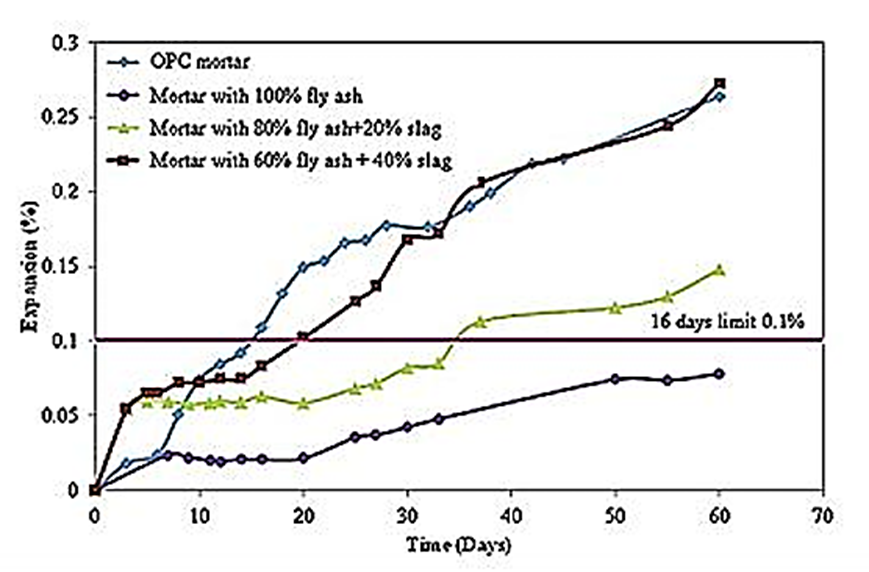
Alkali-Silica Reactivity: Alkali-silica reaction (ASR) is a chemical reaction in concrete between alkaline pore solution (alkali hydroxides) and reactive silica in some aggregates. Alkali-silica reaction (ASR) leads to the gradual but significant deterioration of paste, mortar, or concrete in terms of its strength loss, cracking, volume expansion, etc. The fly ash-based geopolymer mortar was found to have no expansion; that means the geopolymer mortar has strong resistance to the ASR. Sometimes, increasing the slag content to the fly ash/slag-blended geopolymer mortar increased the expansion, but less than the OPC mortar.
Overall, geopolymer concrete has emerged as a sustainable, eco-friendly alternative to OPC concrete that can withstand extremely harsh environments.
-Ariful Islam, Bangladesh
Author, Utopia Educators
 Ariful Islam
References:
1. Concrete durability
2. Hasan, M. J., Islam, A., Sutradhar, A., & Aziz, A. M. (2026). Suitability of alkali activated material as sustainable alternate binder: A comprehensive review.
3.Wong, L. S. (2022). Durability performance of geopolymer concrete: a review. Polymers, 14(5), 868.
4. Geopolymer concrete: A review of some recent developments