
Floods and Flood Management
A flood is a naturally occurring disaster that occurs when water overflows onto land that is normally dry, and flood management is a technique and strategy used to plan, control, and reduce the risks and damages caused by flooding.

A flood is a naturally occurring disaster that occurs when water overflows onto land that is normally dry. Millions of people are stranded every year due to floods from all around the world. Flooding is a common natural disaster in the rainy season and usually happens when rivers, lakes, or drainage systems cannot hold excess water or heavy rainfall occurs in an area. The excess water mainly comes from heavy rain, dam collapse, cyclones, or poor drainage systems. Floods can last for a few hours, several days, or even weeks depending on the situation. In today's article, I will briefly discuss floods, the reasons behind the floods, the types, and how to manage the floods.
The reason behind the floods are
1. River overflow
2. Heavy rainfall
3. Superstructures failure (dams, levees)
4. Melting snow
5. Tsunamis or cyclones
6. Monsoons
7. Man-made (it could be political reason behind the man-made flood)
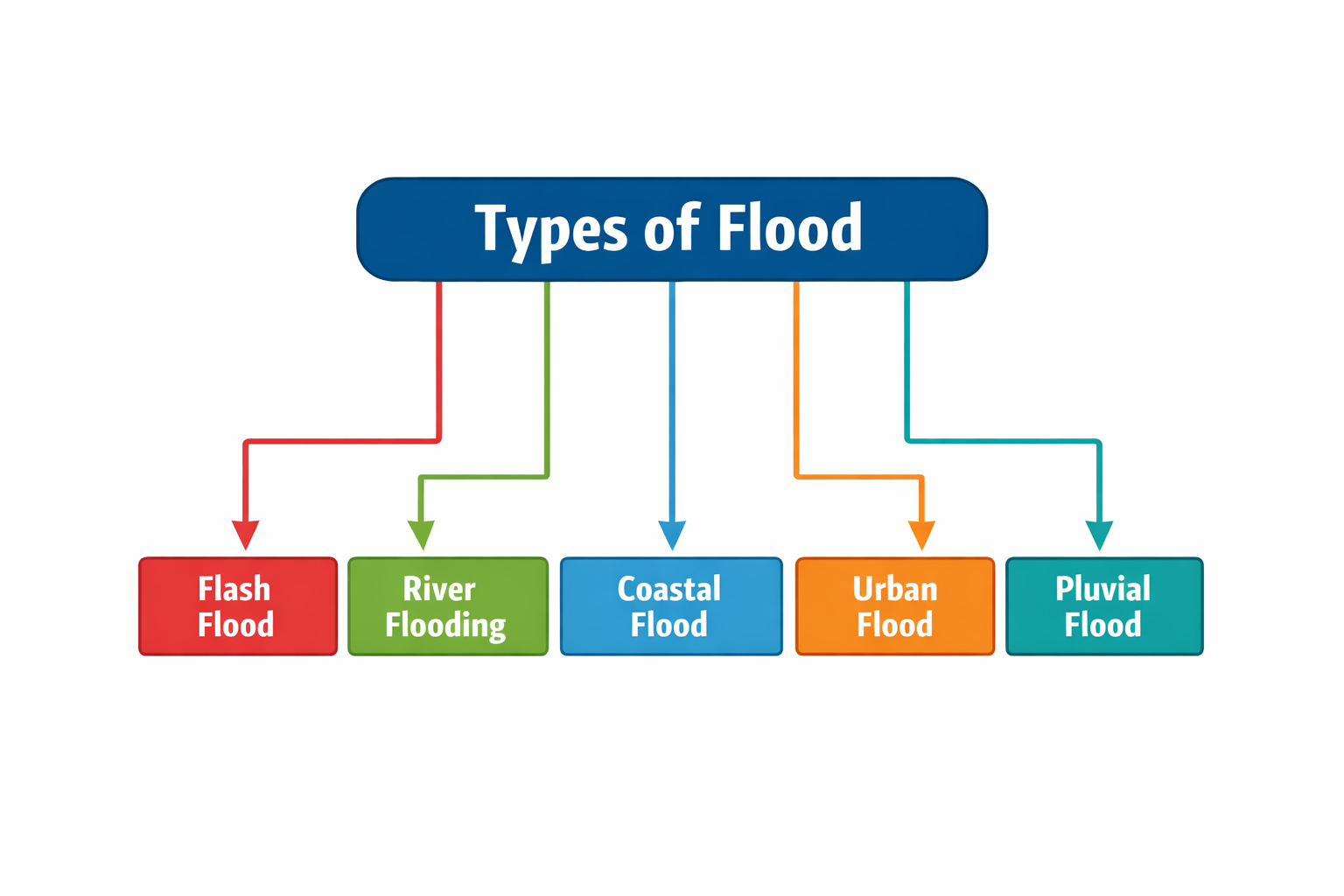
Types of Flood:
- Flash Flood—Sudden or rapid flooding occurs in a region within a short period of time.
- River flooding—River flooding typically occurs when the water level in a river rises and overflows onto the nearby land due to heavy rainfall, a sudden release of water from upstream, or melting snow.
- Coastal Flood—occurs in coastal areas due to storm surges, cyclones, or high tides.
- Urban Floods—due to heavy rainfall in urban areas and poor drainage systems.
- Pluvial flood—called ponding or surface flood—mainly occurs due to heavy rainfall.
Now, we have a clear idea about the flood, types, and reasons. Since floods occur every year and cause significant suffering, property damage, and economic loss. So, it is necessary for us to take effective flood management and mitigation measures. What is flood management?
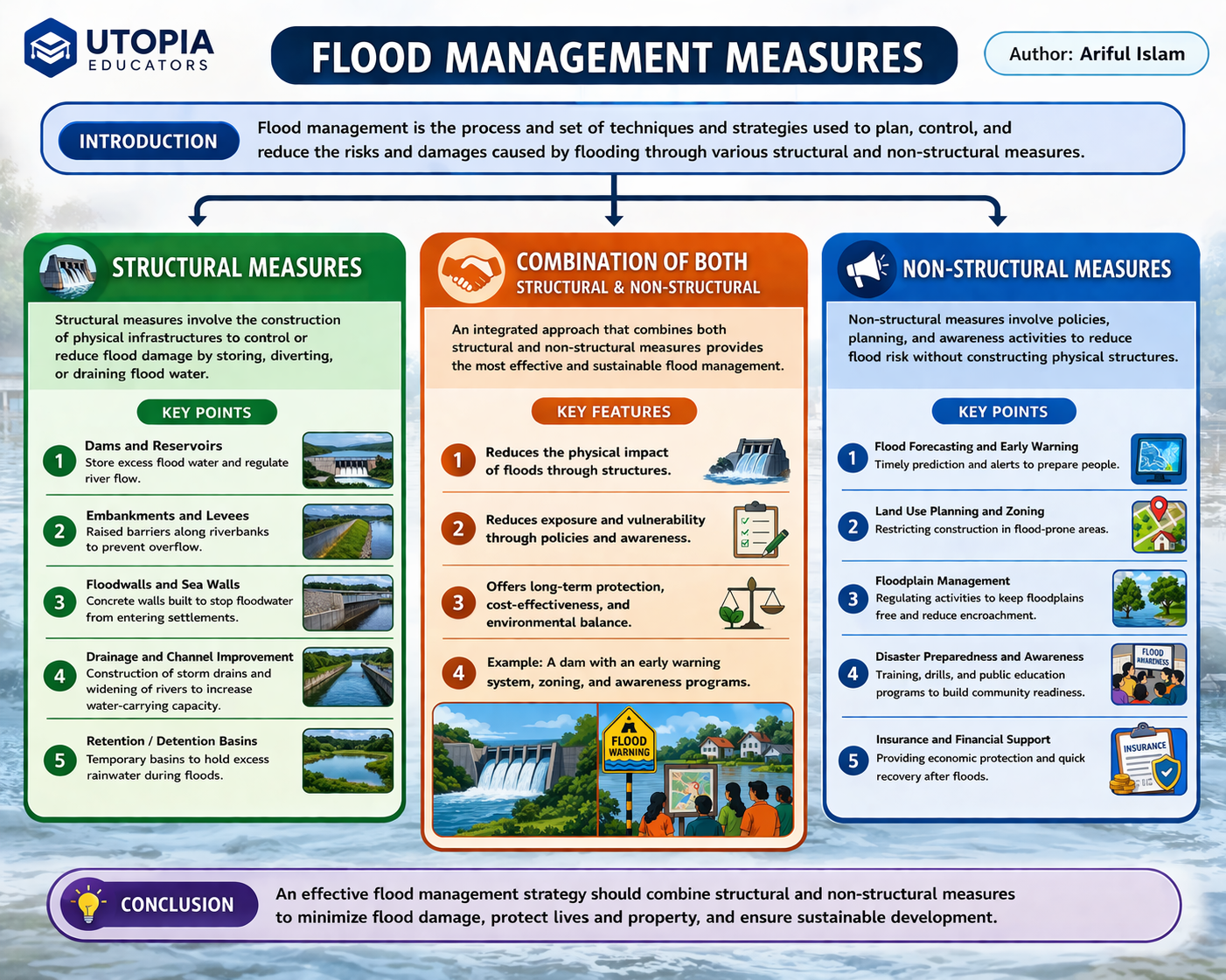
Flood management is a technique and strategy used to plan, control, and reduce the risks and damages caused by flooding. The main reason behind the flood management is to protect human life, property, agriculture, and the environment by minimizing flood risks and damages. There are various types of flood management techniques used depending on the socio-economic condition, physical environment, environmental preservation, etc. All the methods and techniques for flood management can be classified into three broad categories.
- Structural Measures: A physical construction or engineering solution designed to minimize, control, or divert the flood. These include dams and reservoirs that store excess water, levees and embankments, flood walls, and retention and detention basins for temporarily storing flood water. Over the last decades, it has been observed that structural measures significantly reduce the flood, but they also have some adverse effects that may appear with the elapse of time.
- Non-structural measures are focused on planning. preparedness and awareness instead of controlling water physically. Their main goal is to reduce the risk of floods, minimize damage, and protect communities through policies, education, and early warning systems. Non-structural measures consist of flood forecasting and early warning systems, reforestation, community awareness, floodproofing, flood plain zoning & management, etc.
- Structural cum non-structural measure: Combine both methods to provide the most effective and sustainable flood management.
Possible remedial measures for flood mitigation:
- Better flood warning system
- Construct building above flood level
- Plant more trees strategically.
- Restore dry rivers and their tributaries
- structural measures (dams, embankments, retention, etc.)
- Awareness and Training
- Emergency Evacuation Plans
- Channel improvement by cutting, straightening, or deepening.
- By diversion of a portion of flood through bypasses or floodways.
- Rainwater Harvesting and Sustainable Drainage, etc.
-Ariful Islam, Bangladesh
Author, Utopia Educators
References:
1. Types of flood
2. Design Integrity BD (Md. Abu Jobair)